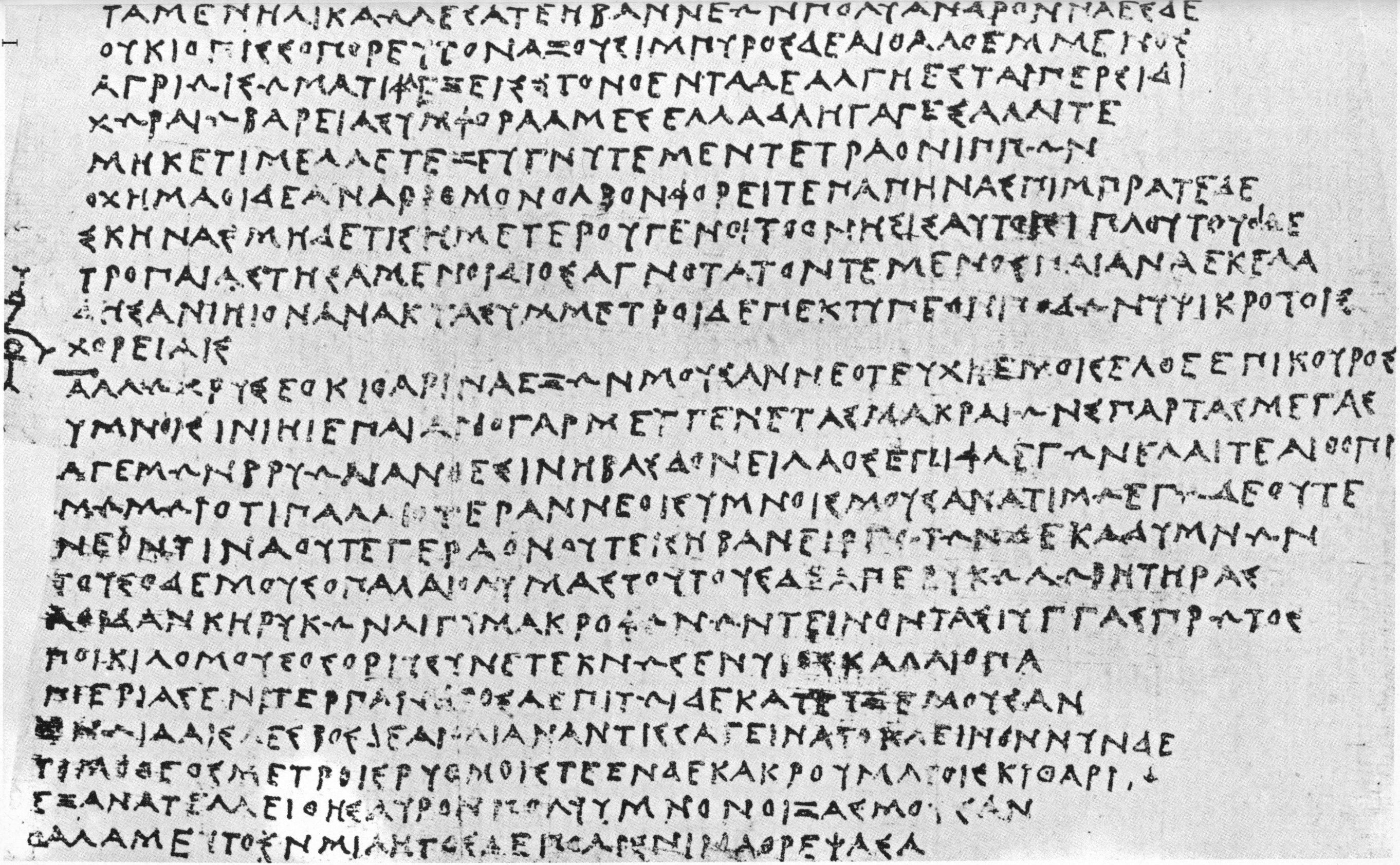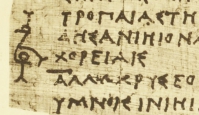
Detail of P.Berol. inv. 9875 col. v (late fourth or early third century BCE), showing the coronis at the beginning of the "sphragis" in the Persae of Timotheus of Miletus.
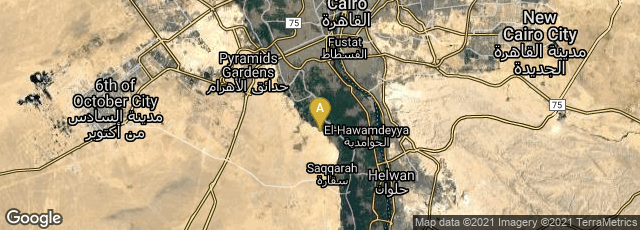
A papyrus fragment of The Persae by the Greek musician and dithyrambic poet, Timotheus (Timotheos) of Miletus, discovered in Abusir, Egypt, is probably the earliest surviving papyrus of a Greek text found in Egypt. It is preserved in the Staatliches Museum, Berlin (P. Berol. 9875).
The text was first edited and published by Ulrich von Wilamowitz-Möllendorff as Timotheos, Die Perser, aus einem Papyrus von Abusir im Aufrage der deutschen Orientgesellschaft (1903).
Morison, Politics and Script. . . . Barker ed. (1972) 11, pl. 8 describes the Greek writing on the papyrus as "Formal book-script; square; monoline; unserifed."
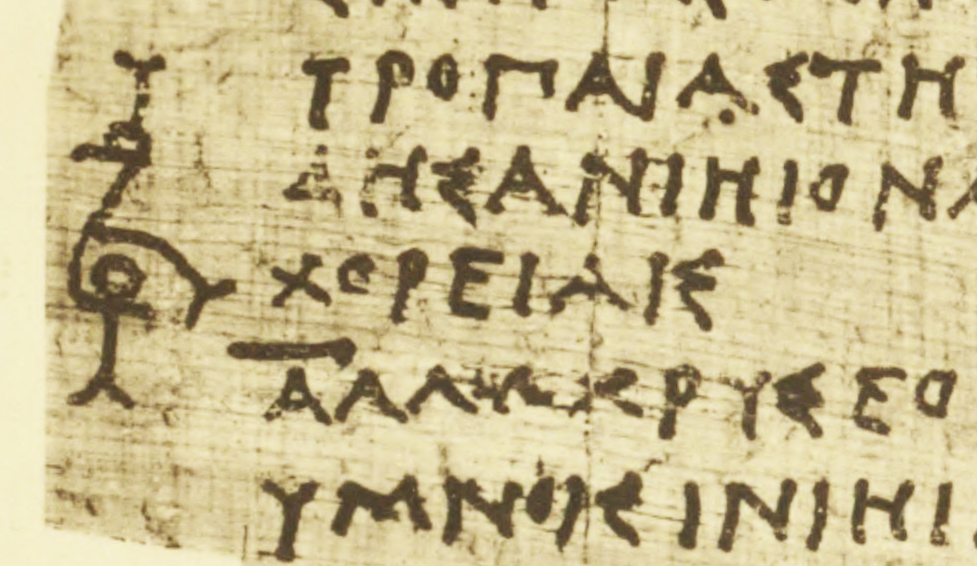
Detail of P.Berol. inv. 9875 col. v (late fourth or early third century BCE), showing the coronis at the beginning of the "sphragis" in the Persae of Timotheus of Miletus.