Rufus Porter Founds "Scientific American" & Sells it to Alfred Ely Beach and Orson Desaix Munn

1845 to 1876
Once you got past the title page of the Scientific American reference book it did not mince around with the motivation of its customers, telling them "How to Get Rich." 
Creative Commons LicenseJeremy Norman Collection of Images - Creative Commons

Once you got past the title page of the Scientific American reference book it did not mince around with the motivation of its customers, telling them "How to Get Rich" by inventing and patenting inventions through the Munn & Co. agency, of course.

In the upper portion of this an orange trade card from Munn & Co, publishers of Scientific American, advertise their American and European Patent Agency.
Creative Commons LicenseJeremy Norman Collection of Images - Creative Commons
In the upper portion of this photograph you see an orange trade card from Munn & Co, publishers of Scientific American, advertising their American and European Patent Agency. To the right of that there is the fancy leather sleeve for a patent that the agency obtained for Louis A. Lyon of Shortey's Depot, Alabama, for a railroad car heater with an automatic fire extinguisher. The patent that came in the sleeve is also displayed. (The patent had been folded in the sleeve for so many years that it required heavy blocks to hold it flat for the photograph.)
Scientific American Reference Book title page
Creative Commons LicenseJeremy Norman Collection of Images - Creative Commons
The title page of the Scientific American Reference Book included a basic Table of Contents.
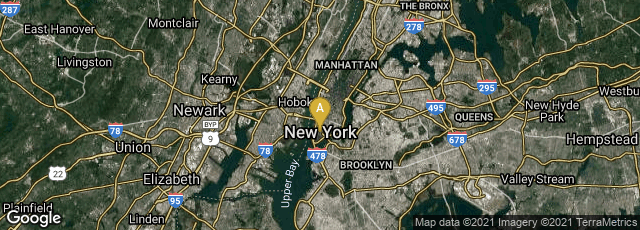
Detail map of Manhattan, New York, New York, United States Overview map of Manhattan, New York, New York, United States

A: Manhattan, New York, New York, United States

Scientific American "Reference Book" and "Hand Book".
Creative Commons LicenseJeremy Norman Collection of Images - Creative Commons
Scientific American "Reference Book" and "Hand Book".
In 1845 American painter and inventor Rufus M. Porter founded Scientific American as a four-page weekly newspaper; 10 months later Porter sold the newspaper to American inventor, publisher and patent lawyer Alfred Ely Beach and publisher Orson Desaix Munn. The newspaper or magazine always promoted inventions, and it appears that the patent agency associated with the Scientific American may have been its major profit center.

Timeline Themes

Once you got past the title page of the Scientific American reference book it did not mince around with the motivation of its customers, telling them "How to Get Rich." 
Creative Commons LicenseJeremy Norman Collection of Images - Creative Commons

Once you got past the title page of the Scientific American reference book it did not mince around with the motivation of its customers, telling them "How to Get Rich" by inventing and patenting inventions through the Munn & Co. agency, of course.

In the upper portion of this an orange trade card from Munn & Co, publishers of Scientific American, advertise their American and European Patent Agency.
Creative Commons LicenseJeremy Norman Collection of Images - Creative Commons
In the upper portion of this photograph you see an orange trade card from Munn & Co, publishers of Scientific American, advertising their American and European Patent Agency. To the right of that there is the fancy leather sleeve for a patent that the agency obtained for Louis A. Lyon of Shortey's Depot, Alabama, for a railroad car heater with an automatic fire extinguisher. The patent that came in the sleeve is also displayed. (The patent had been folded in the sleeve for so many years that it required heavy blocks to hold it flat for the photograph.)
Scientific American Reference Book title page
Creative Commons LicenseJeremy Norman Collection of Images - Creative Commons

The title page of the Scientific American Reference Book included a basic Table of Contents.